My shower drains slowly. What should I check before calling?
A shower that drains slowly is usually a single fixture problem, and that matters. Hair and soap scum catch in the strainer and the trap just below it. That is a different job from a main line problem, where every drain in the house runs slow.
Safe checks you can do yourself: lift the strainer or stopper and clear what is sitting on it. A plastic drain strip, the kind with small barbs, pulls hair out of the first few inches of pipe. Flush with hot tap water afterwards. Then test the others. Run the bathroom sink and flush the toilet while watching the tub. If water rises or bubbles in the tub, the problem is past this fixture.
Chemical drain openers are best avoided. They sit in a standing pipe, can damage fittings, and are a hazard to whoever opens the line next.
Stop running water and call if the toilet gurgles when the shower empties, if there is a sewage smell, or if water comes up in any drain. Gurgling can point to a blocked vent stack, and slow drains everywhere can point to the main line.
A cable machine is usually enough for hair and soap in a branch line. If it keeps coming back, a camera inspection shows why. Expert Plumbers Co is a referral service, not a plumbing company. We refer you to a local plumber for Drain Cleaning in Oldwick, NJ: (380) 262-9173.
One more thing to check is whether the problem is the shower drain itself or the pipe it sits in. If the strainer is clear and the water still pools, try removing the cover and looking at how the drain body is built. Some tubs have a pop-up stopper or a trip lever linked through the overflow, and a bent or hair-wrapped linkage can hold the plug partly shut. In older homes the tub may use a lead or cast iron trap further down that fills with soap and hair, while newer showers have a plastic P-trap that is easier to reach from below. A common mistake is pouring boiling water down the drain, which can soften plastic fittings and loosen joints. If the water level drops only after a long wait, even once the strainer is clean, the blockage is deeper in the branch and needs a plumber's tools.
Water or sewage is seeping out around the cleanout cap in my yard. What does that mean?
If liquid is seeping up around the cleanout cap, the sewer line is full to ground level at that point. The cleanout is a capped pipe that gives a plumber direct access to the main line, and it is often the lowest open point on the system. When a blockage sits downstream, waste water rises until it finds the weakest spot, and that is frequently the cap.
Less often the cap itself is the problem: a cracked cap or worn threads can weep a little after heavy use. The difference is the smell and the timing. A damp ring with no odor that dries out is one thing. Grey or dark water with a sewage smell that returns every time the house uses water points to a blocked or partly collapsed line.
Look at the rest of the house. If one fixture is slow, the trouble may be local. If several drains are slow, toilets gurgle, or a floor drain or shower fills when the washer runs, the main line is the likely culprit.
Safe checks you can do:
Keep children and pets away from the wet area. Hold off on laundry, dishwasher cycles and long showers. Do not unscrew the cap. A line under pressure can spray sewage when the cap comes off, and that is a health risk.
Stop running water and call now if sewage is reaching the yard in a steady flow, if it is entering the house, or if the seep keeps growing while you are using as little water as possible.
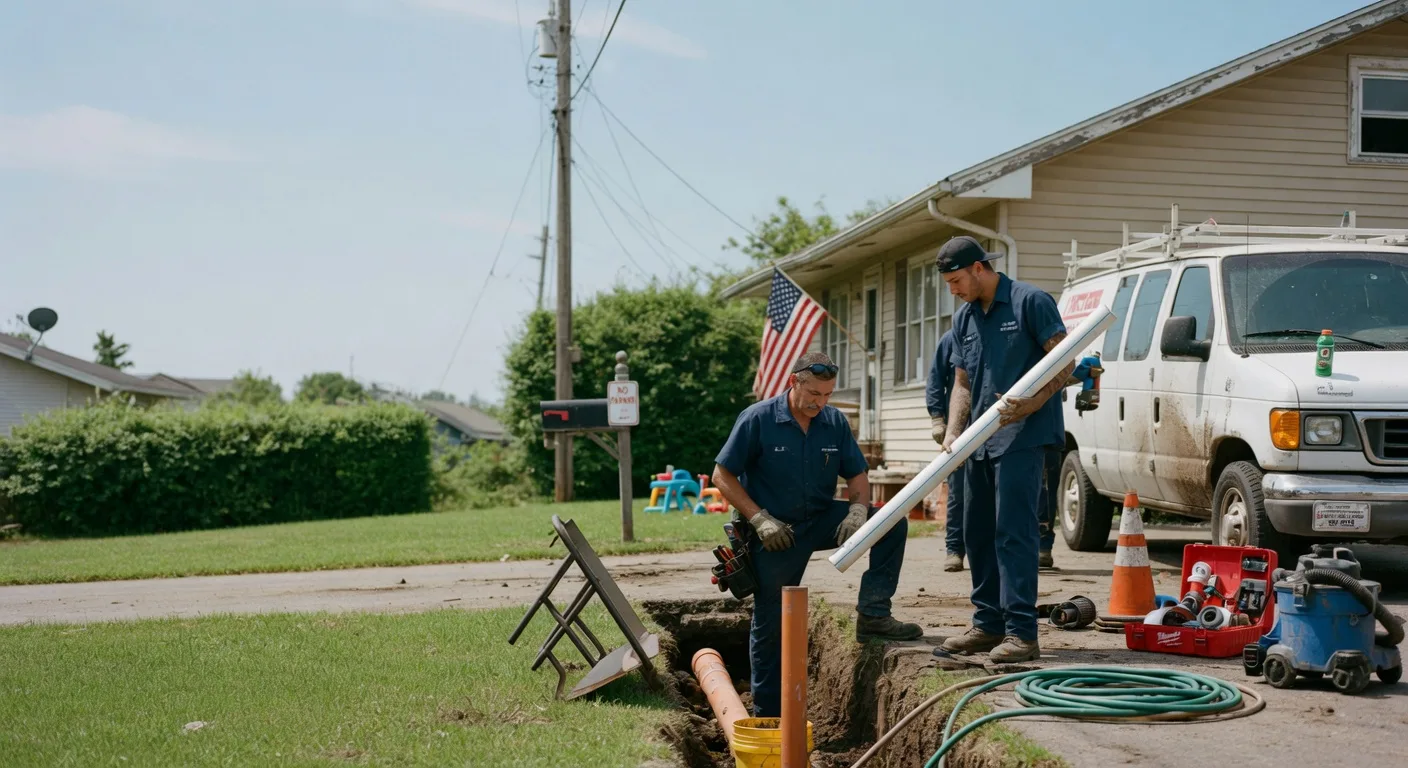
On the repair side, a cable machine is often enough for a soft blockage such as paper or grease. Roots, heavy grease build-up or scale usually call for hydro jetting or a cutting head. A camera inspection afterwards shows whether the pipe is cracked, bellied or offset at a joint, which decides whether cleaning will hold or whether a repair is needed. Cost depends on how easy the cleanout is to reach, how far the blockage sits from it, how much needs to be dug or removed if a repair follows, and permit requirements under local code.
If the line has to be opened for repair, the local building department may need to be involved. To be connected with an independent local plumber in Oldwick, NJ, call Expert Plumbers Co on (380) 262-9173.
The toilet is clogged. When is a plunger enough, when do I need a closet auger, and when is it the main line?
A plunger is enough when the bowl is slow or full but the clog is close, usually paper or a bit too much of everything. Use a flange plunger that seals over the drain opening. Push gently first to push out the air, then pump firmly for 15 to 20 strokes. If the water drops and the toilet flushes freely, that was it. Do not flush again until the bowl has drained.
A closet auger is the next step when the plunger fails twice or the toilet clogs again right away. It is a short cable with a curved head made to pass through the toilet's trap without scratching the porcelain. Feed it in, turn the handle, and pull back out whatever it catches. It reaches a clog the plunger cannot pull or push, such as a wad of wipes or a solid object.
It may be the main line when the toilet is not the only sign. Look for these:
Other drains are slow too.
The tub or shower gurgles or backs up when the toilet is flushed.
Water rises in a floor drain or low fixture.
A plunger and an auger give no lasting relief.
If you plunge and water or sewage comes up in the tub or another fixture, stop. Do not keep flushing. The blockage is past the toilet, in a branch or the main sewer line, and more water only pushes it into the house.
Stop and call if sewage is spreading on the floor, or if you hear gurgling and smell sewage. Clearing a main line may call for a cable machine, hydro jetting or a camera, depending on what is in there and how often it returns. Cost depends on access to a cleanout, how far the machine has to travel and what is found.
Avoid chemical cleaners in a standing toilet. They do not move a solid clog and they splash onto skin and eyes.
Expert Plumbers Co can connect you with an independent plumber in Oldwick, NJ for this: call (380) 262-9173.
I opened the cleanout and it is full of water. Which side of the cleanout is the blockage on?
You pulled the cap on the cleanout and instead of an empty pipe you are looking at standing water. That tells you something useful. Water sitting in an open cleanout means the blockage is downstream of it, toward the street. The pipe is backed up behind the stoppage, and the cleanout is just a window into it.
The reverse also holds. If the cleanout is dry and you still have backups inside the house, the blockage is upstream, between the cleanout and your fixtures.
The usual causes of a full cleanout are root intrusion at a clay joint, a bellied line that holds water and solids, grease build-up on the pipe wall, or a failed sewer lateral where the pipe has collapsed or shifted. Water that holds steady and drains slowly suggests a partial blockage. Water that rises when someone flushes suggests a full one.
One slow fixture is usually a problem in its own branch line. When every drain in the house is slow, gurgling or backing up, especially the lowest tub or floor drain, the main line is the problem. Gurgling at several fixtures can also mean a blocked vent stack, so mention it to the plumber.
Safe homeowner check: Stop using water in the house. Look at the water level in the cleanout without touching the cap again. Note whether it is rising, falling or steady, and which fixtures backed up first. Keep children and pets away from the area.
Stop running water and call now if sewage is coming up in a shower, tub or floor drain, if the cleanout water is rising, or if you smell sewage indoors. Never loosen a cleanout cap under pressure, because sewage can surge out with force. Do not flush or run the washer while you wait.
A cable machine is often enough for a soft stoppage such as paper, grease or roots in an otherwise sound pipe. Hydro jetting is the better tool when grease or scale coats the pipe wall and a cable only punches a hole through it. A camera inspection is the right step when the blockage keeps coming back, when water stands in the line, or when a bellied or broken pipe is likely.
Expert Plumbers Co is a referral service. We connect you with an independent local plumber in Oldwick, NJ. Call (380) 262-9173.
Tell the plumber the cleanout is full and where it sits. Ask whether they will run a camera after clearing the line and show you the footage. The scope depends on access to the cleanout, how deep the blockage is, whether the pipe is damaged, and whether a repair means digging or a permit.
Does drain cleaning or sewer line repair need a permit?
You need a drain cleared or a sewer line fixed, and you want to know whether the work needs a permit before anyone starts. The answer depends on what is being done.
Drain cleaning usually needs no permit. Clearing a blockage with a cable machine, running a hydro jet, or putting a camera in the line does not change the plumbing system, so most areas treat it as maintenance.
Repair or replacement of a building sewer usually does need one. The building sewer is the pipe from the house to the main in the street. Fixing a collapsed section, replacing a root-damaged clay line, or digging out a bellied run changes the system, so it is normally permitted and inspected. If the dig reaches the street, curb or public right of way, a separate permit may be needed. Rules vary by area, so check with your local building or public works office, or ask the plumber what applies in Oldwick, NJ.
The cause points the way. Root intrusion at a clay joint, grease build-up on the pipe wall, scale in cast iron or a blocked vent stack are usually cleaning jobs. A failed sewer lateral, a bellied line that holds water, or a broken pipe is a repair, and that is where permits come in.
One slow fixture rarely leads to a permit question. If every drain in the house is backing up, the main line is involved, and a camera inspection will show whether cleaning will do or a repair is needed.
Safe homeowner check: Find your cleanout and note where it is. Find out where your property line sits, since that affects who is responsible for which part of the line. Call your local building department and ask what work needs a permit.
Stop running water and call now if sewage is coming up inside, if the yard is wet or sunken over the line, or if you smell sewage. Safety comes before paperwork.
A cable machine is enough for a soft clog. Hydro jetting is the next step for grease or scale. A camera inspection shows whether a repair is needed, and that finding is usually what leads to a permit.
Expert Plumbers Co is a referral service. We connect you with an independent local plumber in Oldwick, NJ. Call (380) 262-9173.
Ask the plumber who handles the permit, whether an inspection is required, and how that affects the schedule. The scope depends on how much of the line has to be opened up, access, parts and materials, any right-of-way work, and the code requirements in your area.